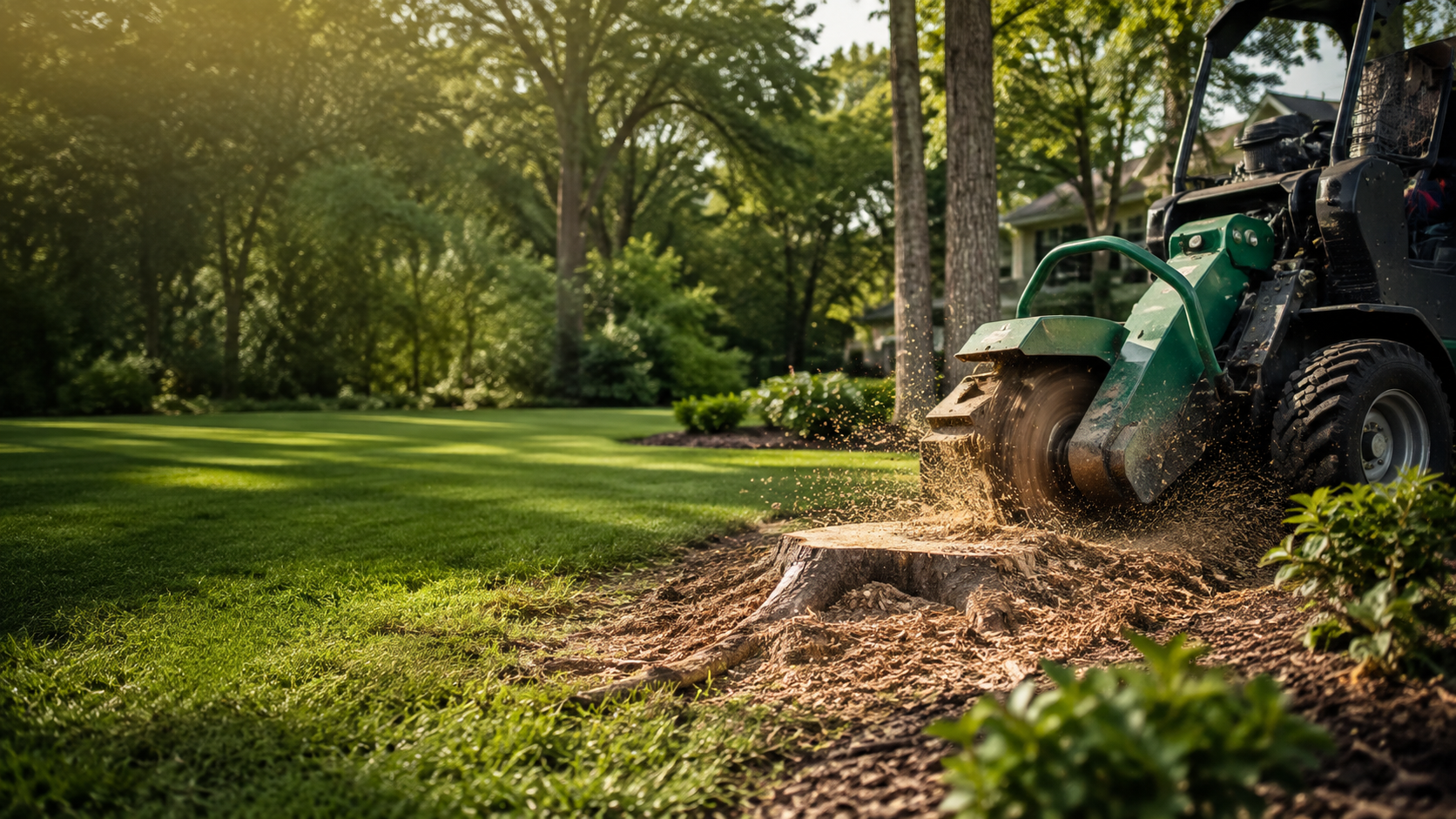
SURFACE ROOTS • ROOT FLARES • TRIP HAZARDS
ROOT GRINDING
Clear accessible roots without pretending every root is safe to cut.
Root grinding for removed-tree root flares, exposed surface roots, mower hazards, fence lines and landscape projects throughout Northeast Florida.
ROOTS FROM A REMOVED TREE
WHAT ROOT GRINDING CAN ADDRESS.
After a tree is removed, its root flare and surface roots may remain above grade. These roots can interfere with mowing, sod, mulch beds, fence installation, walkways and landscape grading.
- Root flare surrounding a removed stump
- Exposed roots creating mower or trip hazards
- Roots blocking sod or planting-bed preparation
- Accessible roots along proposed fence lines
- Surface roots in future landscape or path areas
Grinding targets visible and reachable material. It does not remove the entire underground root system.
ROOTS FROM A LIVING TREE
NOT EVERY EXPOSED ROOT SHOULD BE CUT.
Large roots connected to a living tree can contribute to water and nutrient movement, anchoring and structural stability. Grinding or severing a significant root may weaken the tree or increase failure risk.
Roots close to the trunk, roots on the side of a lean, or large structural roots may warrant review by an ISA Certified Arborist before work proceeds. First Coast does not make a blanket promise that every living-tree root can safely be removed.
Tree healthStructural stabilityRoot sizeDistance from trunkLean directionArborist review
PHOTO REVIEW
SHOW THE ROOTS AND THE WHOLE TREE.
For roots from a living tree, close photos alone are not enough.
Show the Root
Photograph the full exposed section and place a tape measure beside it.
Show the Trunk
Include the root’s distance and direction from the trunk.
Show the Tree
Provide a full-tree photo showing canopy, lean and nearby structures.
Explain the Goal
Tell us whether the concern is mowing, sod, fencing, concrete or drainage.
LIMITATIONS
ROOT GRINDING IS NOT FULL EXCAVATION.
Accessible Root FlareOften handled as part of the stump-grinding work zone.Surface RootsVisible roots may be grindable after scope and tree status are reviewed.Roots Near StructuresWorking clearance and private lines can limit access.Full Root RemovalMajor excavation is a separate scope from surface grinding.FAQ
ROOT GRINDING QUESTIONS
Can exposed surface roots be ground?
Roots from a removed tree can often be included. Roots attached to a living tree require evaluation because removing them may affect health or stability.
Does root grinding remove the whole root system?
No. It targets accessible roots within the work area and does not excavate every buried root.
Can roots beneath concrete be ground?
Not through intact hardscape. Concrete, pavers or other surfaces normally must be removed before covered roots can be reached.
Can root grinding stop future settling?
Not completely. Buried roots may continue decomposing, and soil can settle later. Construction areas may require excavation or engineering beyond routine grinding.
NEED ROOTS REVIEWED?
Send photos showing the roots, stump or living tree, measurements and nearby structures.
Request a Photo Quote